Lets work!

Phone

+1 862-316-4161

Email

Lmartinez225@outlook.com

Website

https://lm.itakhost.net/

Address

Newark Nj, 07104

Social Links

Service

Level Design

Level design is a key pillar of game development, responsible for shaping the player's journey through the game world.
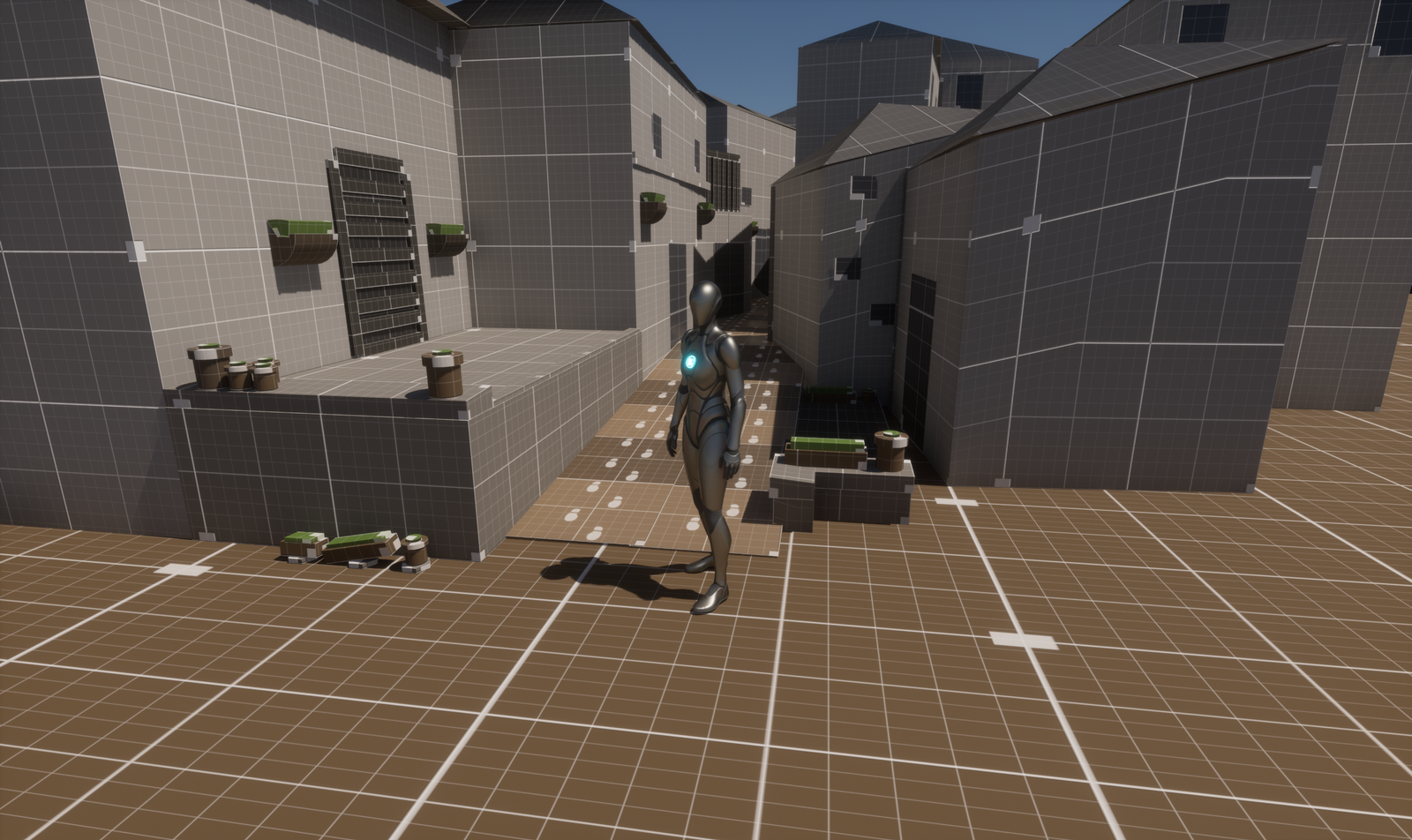
Level Design
Description

The purpose of level design is to create structured environments that encourage exploration, test player skills, and highlight core mechanics. Each area of a level must serve a purpose whether that’s teaching a new ability, challenging reflexes or decision making, or advancing the story. Layout, enemy placement, item location, and visual cues all work together to build a cohesive gameplay experience.

🧠 Challenging Puzzle Design

Strong levels often incorporate environmental puzzles or problem-solving elements that blend naturally into the world. Effective puzzle integration includes:

  • Multi-step challenges that build complexity over time
  • Visual and audio clues embedded in the environment
  • Interactive elements such as keypads, levers, doors, and triggerable systems
  • Logic-based progression that rewards critical thinking and observation

Puzzle pacing is balanced to maintain flow, offering both satisfying moments of discovery and opportunities for player creativity.
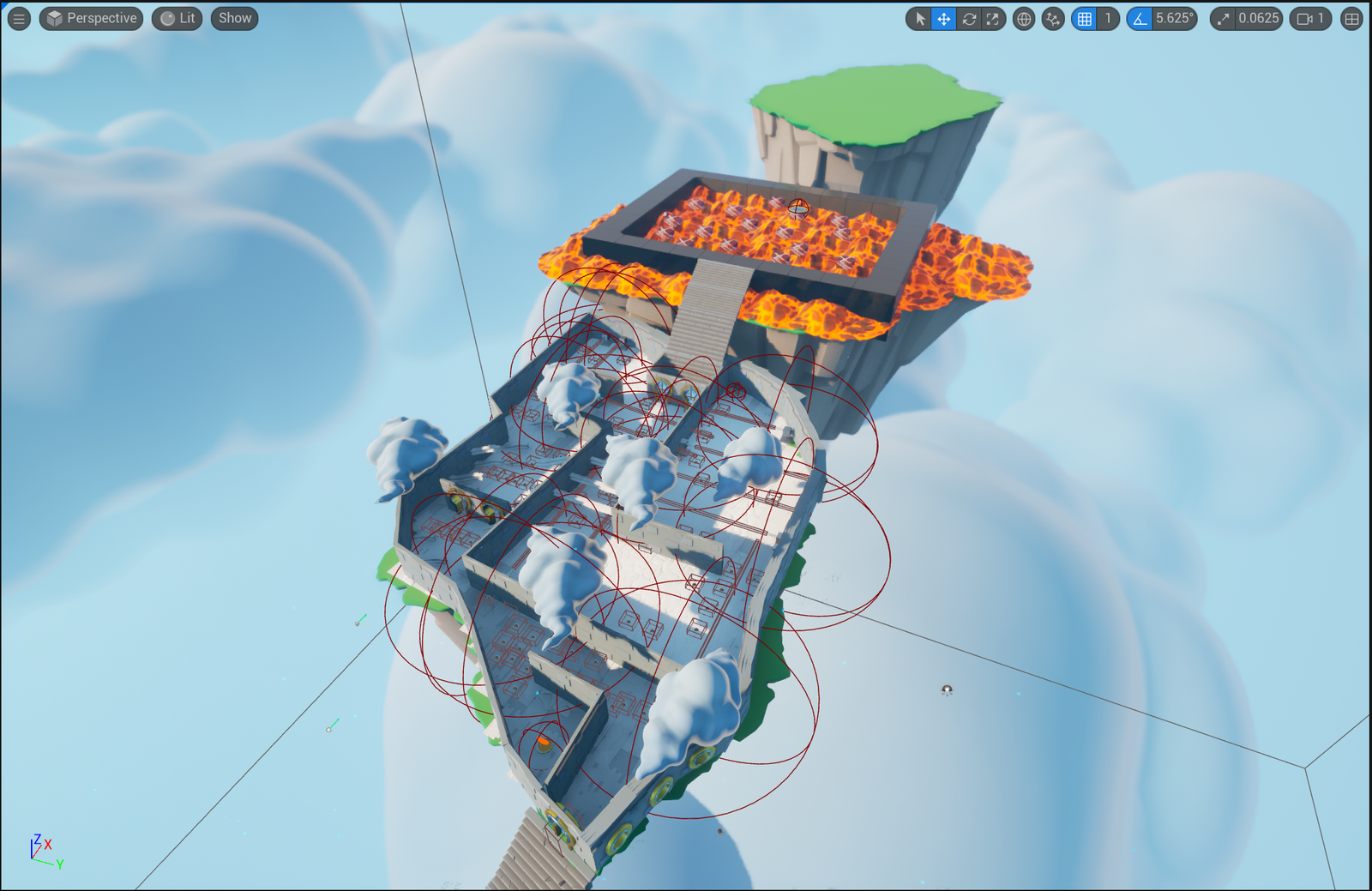
Key Features
  • A well-designed level introduces mechanics gradually and raises the challenge at a steady, manageable pace. Key principles include:
  • Early sections that act as tutorials without breaking immersion
  • Mid-level areas that build mastery of mechanics
  • Final encounters or challenges that test skills learned throughout
  • screenshot-2024-08-28-121511.png

    Optional side paths or secrets that reward exploration

    🌍 Interactive and Dynamic Environments

  • Interactive elements transform static levels into living, reactive spaces. Levels are enhanced by features such as:
  • Trigger-based systems (e.g., power shutdowns, alarms, environmental changes)
  • Destructible or transformable elements (ex., collapsing floors, draining water)
  • Item-dependent progression (ex., keycards, access terminals)
  • AI-driven encounters that react to player presence
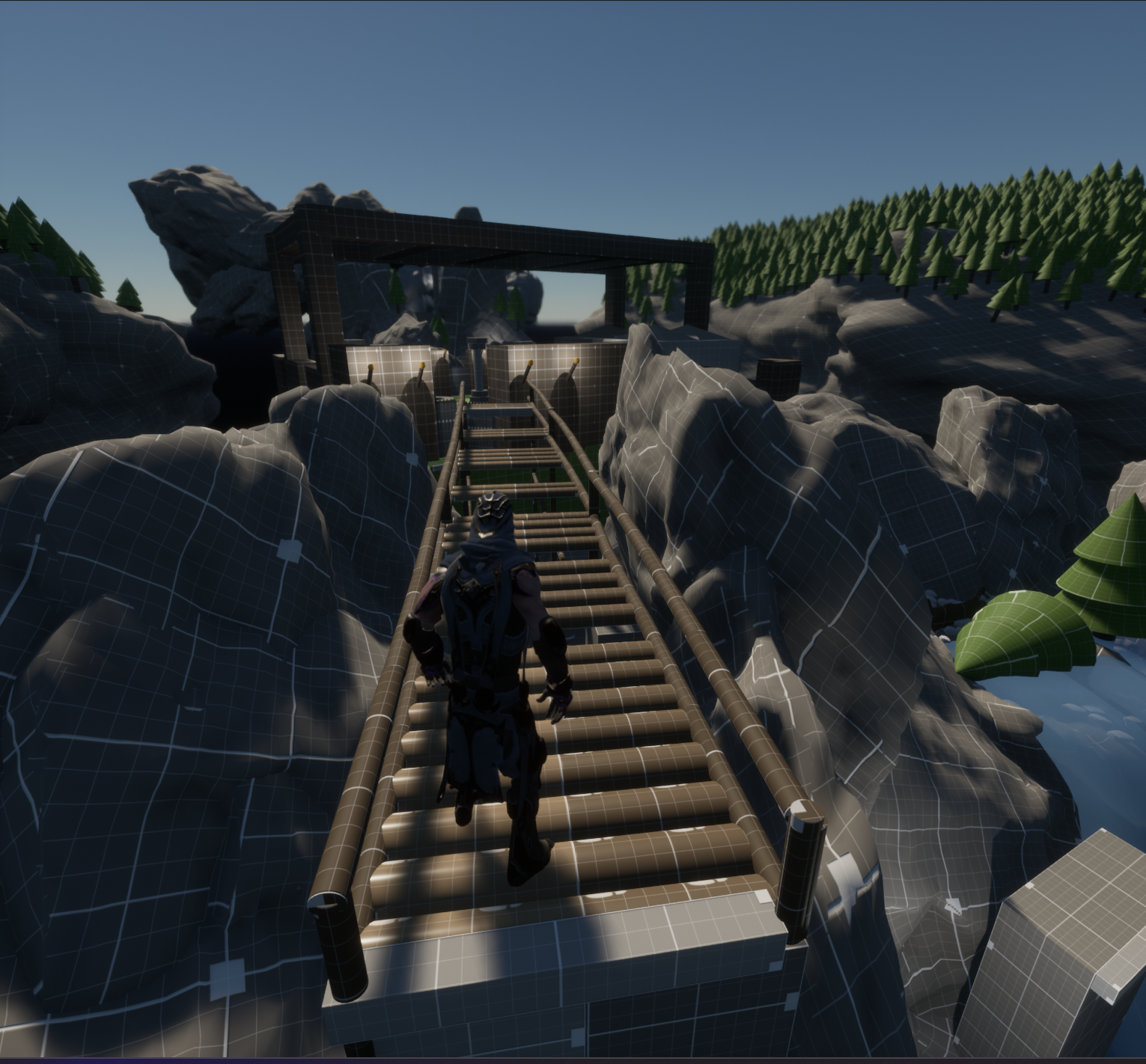
     

    screenshot-2024-10-14-194353.png
Technologies Used
  • Unreal Engine: Primary development environment used for level creation, logic implementation, and environment iteration.
  • Level Blueprint System: Applied for event scripting, area-based logic, puzzle triggers, and dynamic interactions.
  • Blender: Used for 3D modeling of props, environmental assets, and custom layout pieces to support gameplay flow.
  • Navigation Tools: Employed to define AI paths, player movement spaces, and ensure fluid interaction with the game world.
  • Lighting & Post-Processing Tools: Support mood setting, visual guidance, and environmental storytelling.
Design Highlights
screenshot-2025-07-09-124206.png

Level layout is structured to guide player movement without obvious markers. Strong layout elements include:

  • Use of lighting for navigation, atmosphere, and focus
  • Environmental storytelling through object placement and wear
  • High-quality models and textures that match the world’s tone
  • Landmark placement for spatial awareness
  • Looping paths that encourage exploration and unlock shortcuts
  • Verticality that adds depth, complexity, and pacing variety
  • Hidden areas and optional routes that reward curiosity
Share

Leave a comment

Your email address will not be published. Required fields are marked *