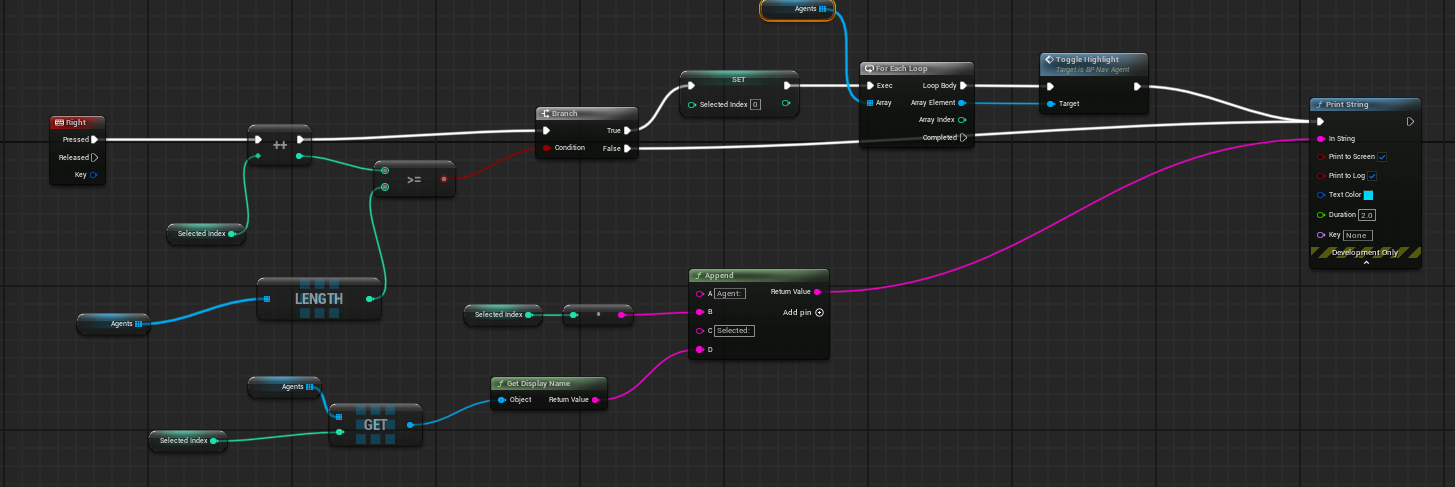
Implementing complex game mechanics and interactions using
Unreal Engine's Blueprint system.
Description
One of my core strengths as a game developer lies in designing and implementing complex gameplay systems using Unreal Engine’s Blueprint Visual Scripting system. This skill allows me to create dynamic, responsive, and scalable game mechanics without requiring traditional code.
By leveraging Blueprints, I’ve built a variety of interactive systems ranging from puzzle logic and cutscene triggers to player abilities and environmental interactions. This approach enables me to rapidly prototype ideas, debug efficiently, and deliver polished gameplay experiences that align with both design vision and technical performance.
Key Features
🔧 Complex Gameplay Mechanics
I specialize in creating modular, scalable gameplay systems using Blueprint logic. These include:
Conditional state machines for player behavior (e.g., crouch, jump, interact)
Timed puzzle mechanics and logic-driven object interactions
Ability systems with cooldowns, charge-ups, and conditional effects
Trigger-based sequences that control narrative or event flow
Each system is designed to be easy to expand, debug, and reuse across different levels or projects.
🎮 Interactive World Elements
In every game environment I build, interaction plays a key role. I’ve used Blueprints to develop:
Interactive switches, doors, pressure plates, and levers
Proximity triggers and line-of-sight detection for AI or environmental changes
Keypad systems with randomized codes and player feedback
Cutscene triggers that activate cameras, audio, and scripted events
These elements contribute to a deeper, more engaging player experience while maintaining performance and clarity.
🧩 Modular Visual Scripting
Rather than hard-coding every system, I design modular Blueprint components that can be plugged into multiple areas of a game. For instance:
A generic door Blueprint with a variable for key requirements or event triggers
A damage-over-time system usable by multiple enemy types or traps
Custom blueprint macros and functions to reduce duplication and improve workflow
This modularity ensures scalability and keeps my development organized and efficient.
Technologies Used
Unreal Engine (UE4 & UE5): My primary development platform for building 3D games, level environments, and game logic systems.
Blueprint System: Used to implement core gameplay, UI behavior, interaction design, and environmental logic.
Sequencer & Timeline Tools: For integrating animations, cutscenes, and camera transitions directly within Blueprint-driven sequences.
UE Debugging Tools: Including the Blueprint debugger, print logs, and simulation tools, all of which I use extensively during development to test, monitor, and optimize systems in real-time.
-Through Blueprint scripting, I’ve delivered:
Fully functional level prototypes
Responsive AI behaviors
Puzzle systems and game logic
Modular cutscene and camera control systems
Dynamic inventory and pickup systems
Polished interaction systems for both 2D and 3D game environments
This skillset allows me to bring interactive experiences to life efficiently and effectively—bridging the gap between game design and implementation.